I think we all know, in some way, what grief feels like.
But I often wonder—what does grief actually look like?
Is it tired eyes? Unwashed hair? Baggy sweats or holes in your favorite shirt? Forced smiles masking exhaustion? Loud yawns hiding a heartache? Or is it something as simple—and as devastating—as a single picture?
He once bought her little diamond earrings for Christmas. I don’t know why. Maybe he knew she would lose them—after all, he was the first to point out that she often didn’t even know where her socks were. But I don’t think he cared. He just wanted to show her she was special. I think that’s what dads do for their daughters—little gestures that are meaningful in ways only they truly understand.
Like the time she wanted a dog so badly, she could barely see straight. Nobody else in the house wanted one, but she was relentless. At five years old, she promised she would feed it, water it, bathe it, walk it, brush it, love it—everything a puppy could possibly need. He believed her intentions were pure, though he probably doubted she could pull it off. So, he got her a fake one. A robotic dog that barked, walked, and ate with the push of a remote control.
On Christmas morning, she heard the barking from across the room. And for her, it didn’t matter whether it was real or pretend. When she found her hidden puppy, she loved it, just like she said she would. For forty-eight hours. Then her attention moved on to a stray cat she somehow adopted, who ended up living in our garage.
My husband was no fool. He knew he needed to return the $300 robo-pup, but he worried her little heart would break if the missing dog disappeared without explanation. So, he did what only a truly creative—and loving—dad could do: he tore a hole in the side of the box and told her it ran away. She sniffled for a few minutes, he got his money back, brought her home a fish, and eventually a real dog. And then another. Because all she had to do was flash those big gray eyes at him, and he would do anything she wanted.
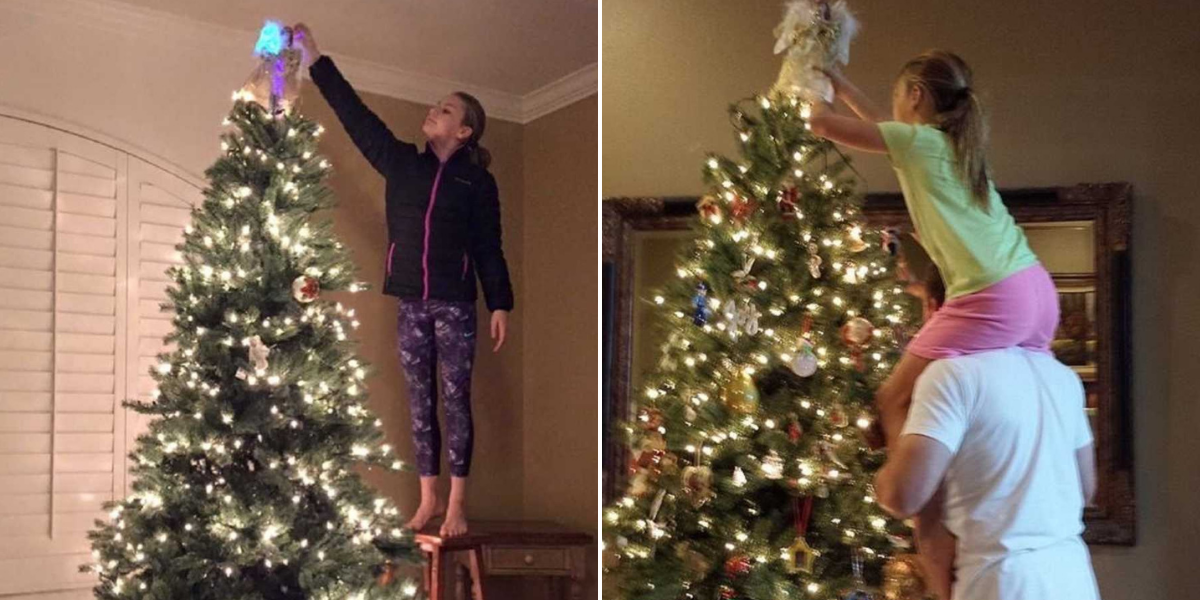
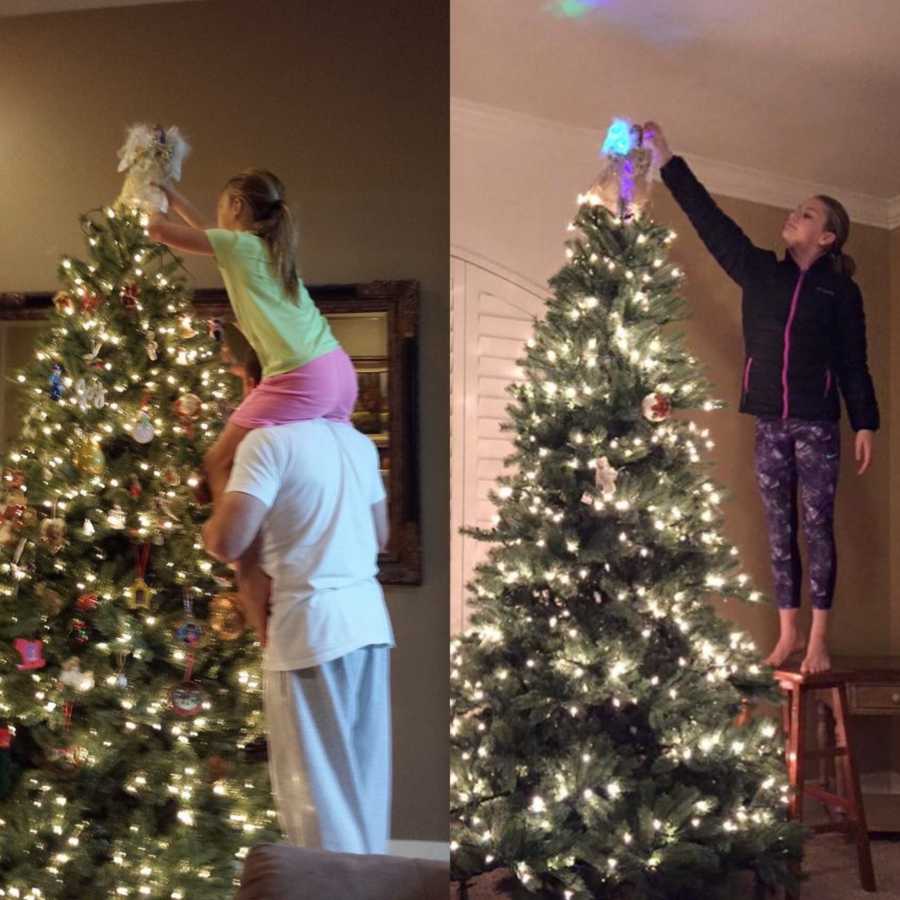
The week before Christmas, all she wanted was to climb onto his shoulders and place the angel on the tree. Every year, he did it. Even when his back ached. Even when he had headaches. Even after long workdays. Even when his body was full of tumors. He did it anyway. And he did it until he couldn’t.
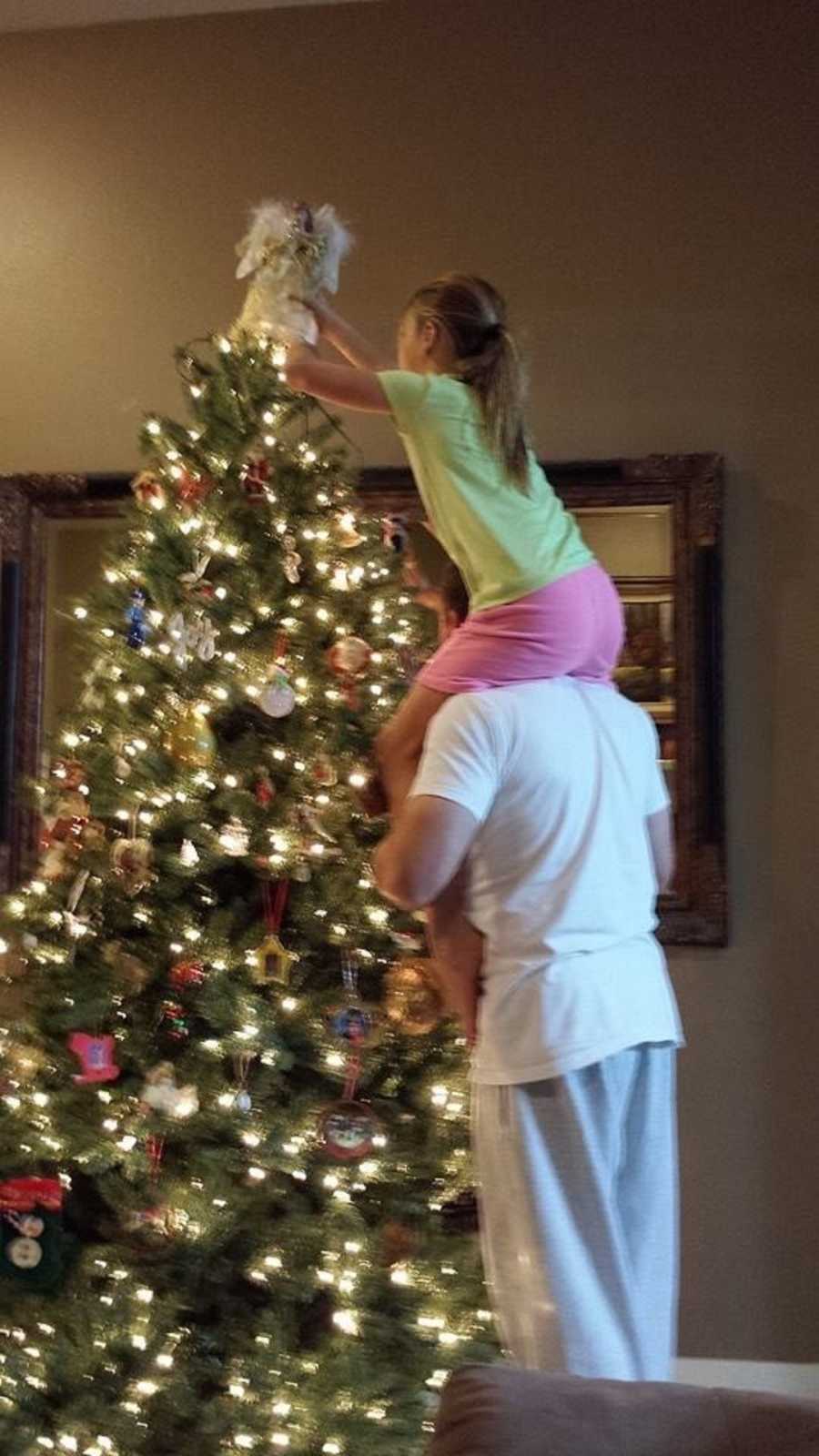
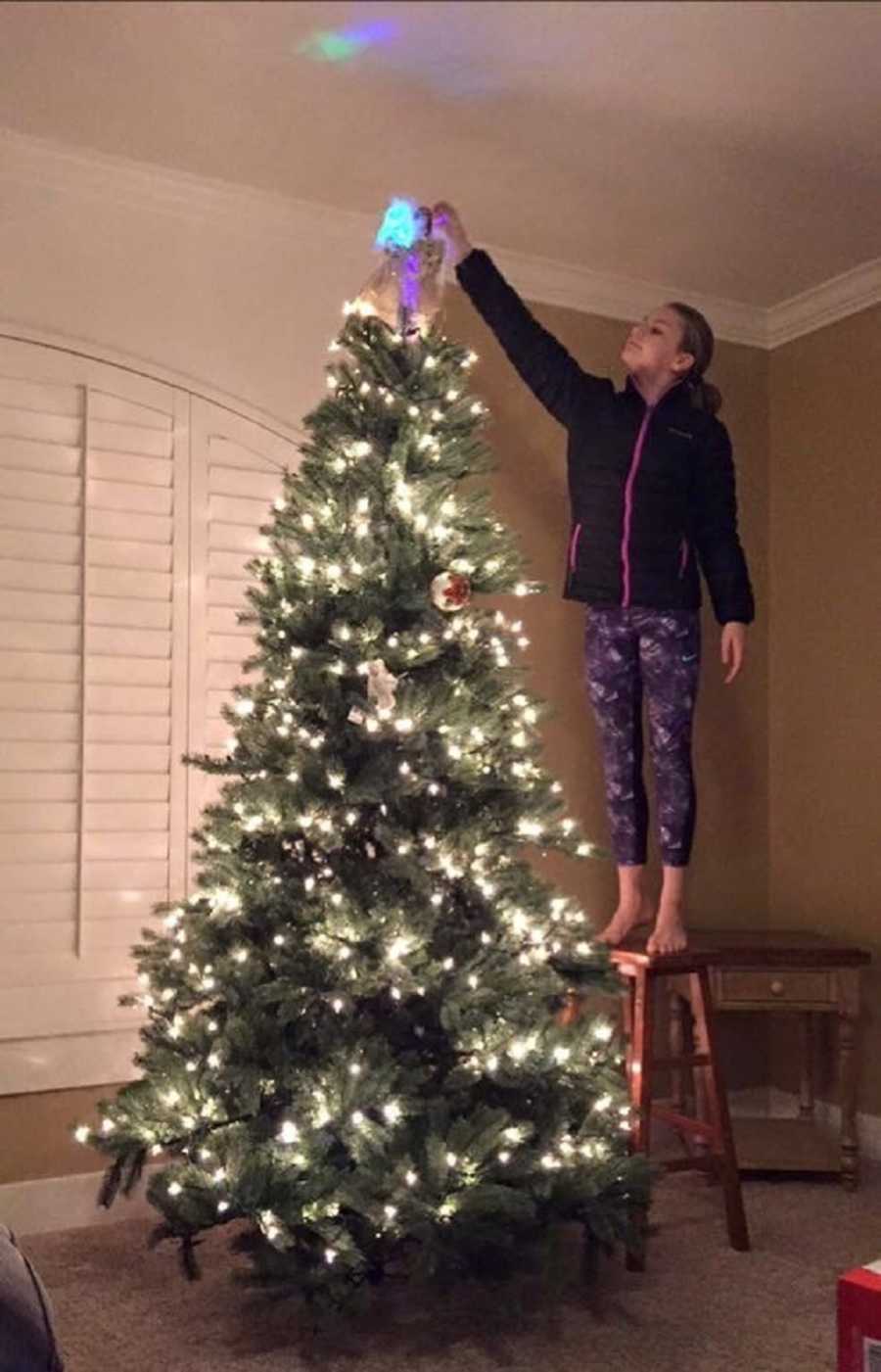
And then, the next year, he was gone. She had to do it herself—just like so many other things she’s had to face on her own. Because he isn’t here anymore, and we’ve had to figure out how to celebrate, how to live, how to decorate, how to exist in a world without him.
And it’s not easy. Not three minutes into grief, not three months, not even three years. Because just when you think you’re holding it together, a photo appears on social media—a memory of him helping her place the angel—and then one where he isn’t there at all. And that one picture says it all. It’s worth a thousand words, some of them even curse words, but it speaks volumes.
That photo is what grief looks like. The ache of knowing that this year, next year, and the year after, he won’t be there for her to climb onto his shoulders, to put the angel on top of the tree.
And yet, somehow, we continue. We celebrate. We decorate. We trim the tree. Not because we have to, but because we want to. Because we want to live. We want to flourish. We want to enjoy life—even in the shadow of loss.
So take the pictures, friends. Eat the cookies. Open the presents. Wear the sweaters. Place the angels. Sing the carols. Jingle the bells. Let yourself be swept away by the things that make you happy. Because it’s okay to feel joy. Even in grief. I promise—it really is okay, no matter what your grief looks like.