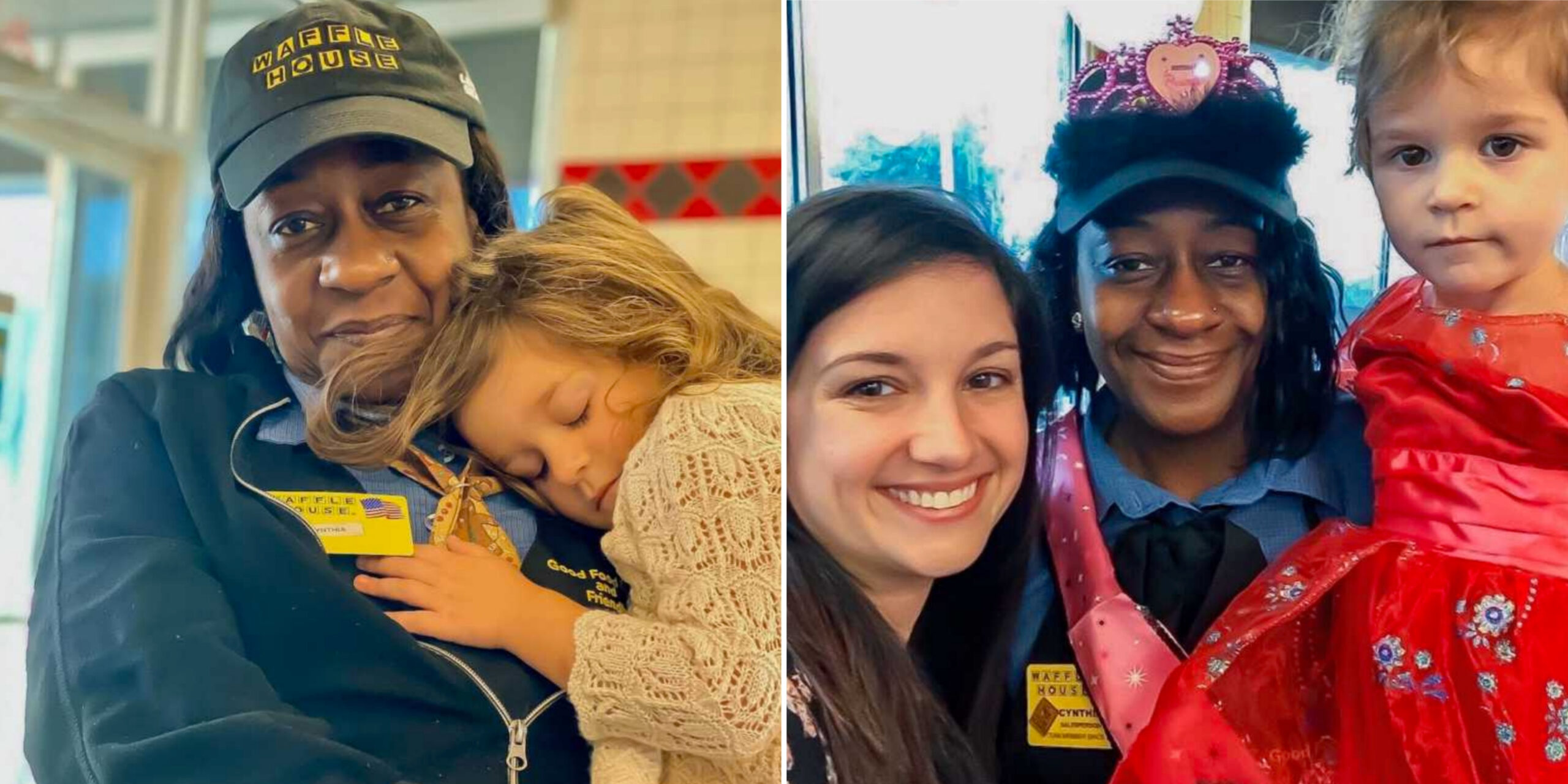
Mrs. Cynthia has been part of our lives for as long as I can remember. Long before Holland could talk, this remarkable woman would arrive at the corner booth at Waffle House in Fort Myers, always carrying raisin bread and apple juice, and greet us with a smile that could light up the entire restaurant.
Even as a baby, Holland grinned whenever she saw Mrs. Cynthia. By the time Holland turned one, our bond with Cynthia had deepened. We knew the little details of her life—where she grew up, what her children were up to, how her day was really going. In return, we shared pieces of our own story.
I prayed for her adult son; she prayed for my breast cancer. I spent hours writing the bulk of my book in her section of the restaurant, and she was always there to refill my coffee, offer encouragement, or simply listen when frustration hit hard. Over time, I grew to love Mrs. Cynthia deeply—but nobody loves her quite like my daughter does.
Holland celebrated her first, second, and third birthdays at that Waffle House. Nowadays, Mrs. Cynthia already knows Holland’s order the moment our car pulls into the lot: crispy bacon, a waffle, and a side of chocolate chips, always served with her signature smile.
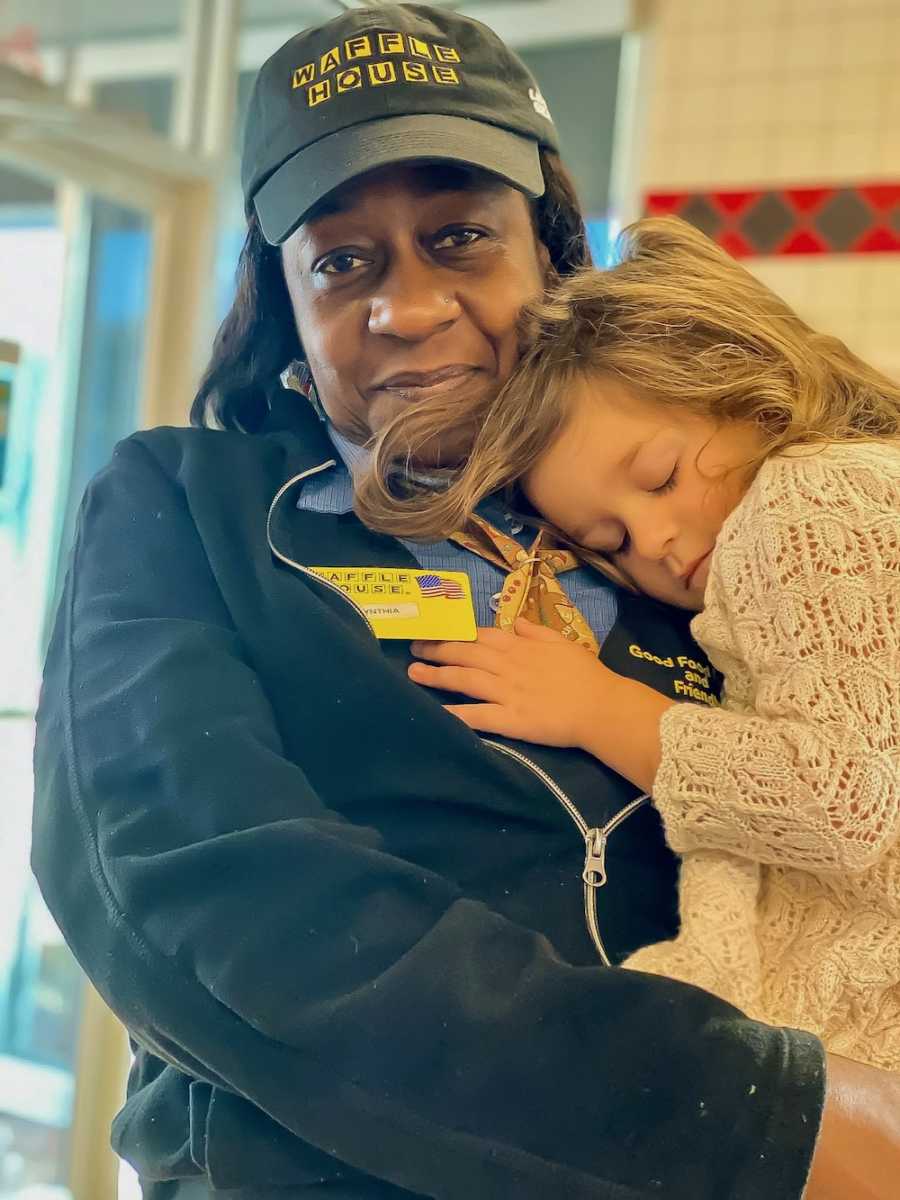
For nearly two years, whenever we arrived, the staff would play “Let It Go” on the jukebox. Rica, Kia, and Cynthia would sing and dance ballet around the restaurant with Holland, twirling her in the air while I laughed and captured every magical moment. But this year, when Holland decided she was “too old” for all of it, I think it broke Mrs. Cynthia’s heart just as much as mine.
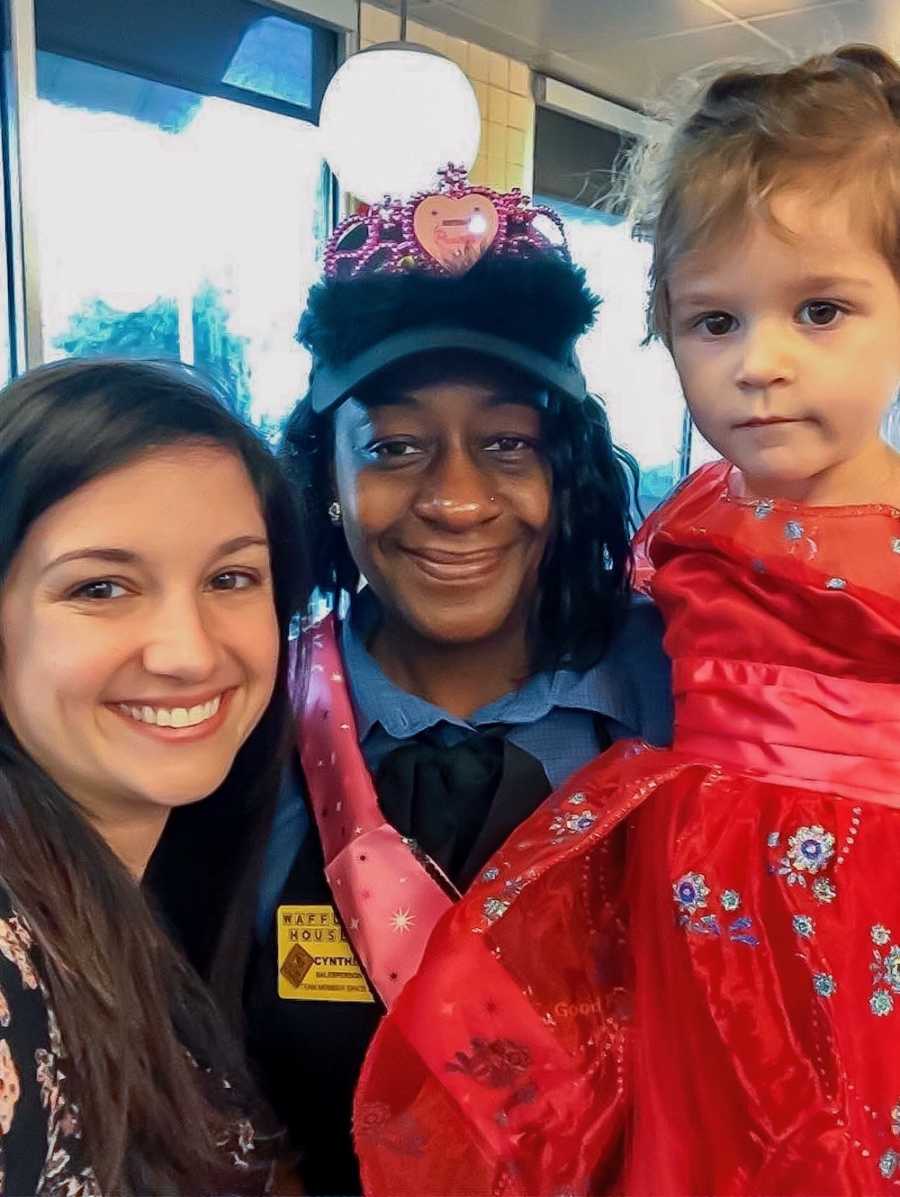
The friendship that blossomed between those two was simple, effortless, and pure. One look at this picture melts my heart.
But as children grow, simplicity sometimes fades. Their curiosity deepens, their questions become harder to answer, and no parent can control every thought or every word.
Like today, when Mrs. Cynthia stepped away to help another customer. Holland’s eyes followed her with unusual intensity. I noticed her furrowed eyebrows and should have guessed she was thinking deeply—but I wasn’t prepared for what came next.
When Mrs. Cynthia returned, Holland gently placed her small hands on either of her cheeks and asked, “Mrs. Cynthia, I want to have dark skin like you. Why is your skin so dark?”
My heart stopped. Conversations about race feel so delicate, especially today. And my daughter had approached it with the innocence and directness only a three-year-old can muster. I froze, unsure how to respond. But before I could say a word, Mrs. Cynthia scooped Holland into her arms and said, with that same radiant smile:
“Because God made everyone different! Isn’t that wonderful?!”
Holland nodded enthusiastically.
“But, Mrs. Cynthia,” she continued, “if I had your skin, we could both dress up like Tiana!”
Cynthia cackled. “You can dress like Tiana any time, honey.”
And just like that, the moment passed. Cynthia moved on to the next task, her morning continuing in its usual rhythm.