Ozzie came into this world on October 1, 2018, at 7:28 a.m., weighing a solid 7 pounds, 5 ounces. In that instant, our lives transformed forever—we were officially parents! But just four months before all the excitement, life threw us a curveball we never saw coming.
Every appointment and ultrasound before the 20-week mark had gone perfectly. Every time the wand touched my belly, we saw a healthy, growing baby—perfect hands, perfect feet, a perfect heartbeat. Everything looked flawless.
So, when it was finally time for our 20-week anomaly scan, my husband and I went in full of excitement, eager to see every detail of our little one. Surely, if there was something wrong, we’d have known by now, right? My blood tests and urine tests had always been normal—what could possibly be wrong?
We walked into the ultrasound room, I laid down, and lifted my top. I wasn’t in the best position to see Ozzie on the screen, but that didn’t matter—I just wanted to see him, period. The ultrasound tech began the scan. His heart looked perfect, kidneys functioning properly, umbilical cord blood flow normal. She measured his abdomen and legs, and then it was time for the head.
“I’m having a hard time getting to the baby’s head,” she said.
“Let’s see if emptying your bladder helps,” she suggested.
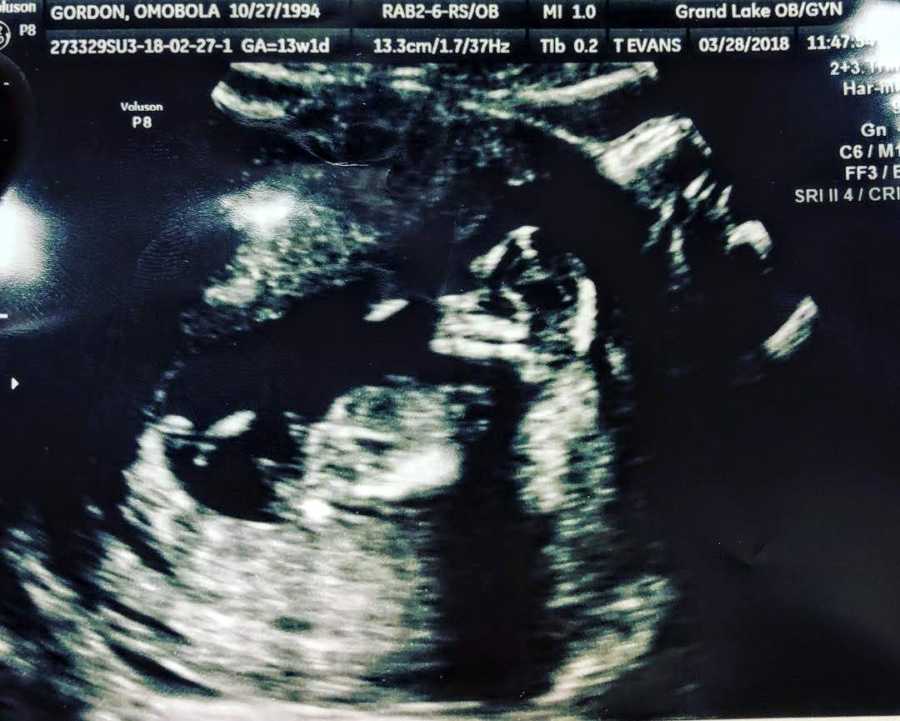
I went to the bathroom, came back, and we tried again. Still, Ozzie’s head wouldn’t give them a clear view. After a few more minutes, the tech concluded that he simply wasn’t in a favorable position, and we went home. We didn’t think too much of it—just an awkward position, nothing more.
A few weeks later, at a routine OB appointment, the vibe of the room felt off. My doctor asked if I had traveled recently and whether I’d been bitten by mosquitoes. I had only been to Houston for Easter, seven weeks prior, and couldn’t recall any bites. That’s when our world shifted: the doctor suggested that our baby might have Trisomy 18.
Trisomy 18? My mind couldn’t comprehend it. I had been diligent with prenatal care, taken vitamins, and followed all the advice I could find. How could this be happening to us? Shocked and devastated, we were referred to a maternal-fetal specialist. We left that appointment feeling numb, heartbroken, and overwhelmed.
Maybe it was just Ozzie’s position, we told ourselves. “Come on, Oz, move!” we whispered in hope.
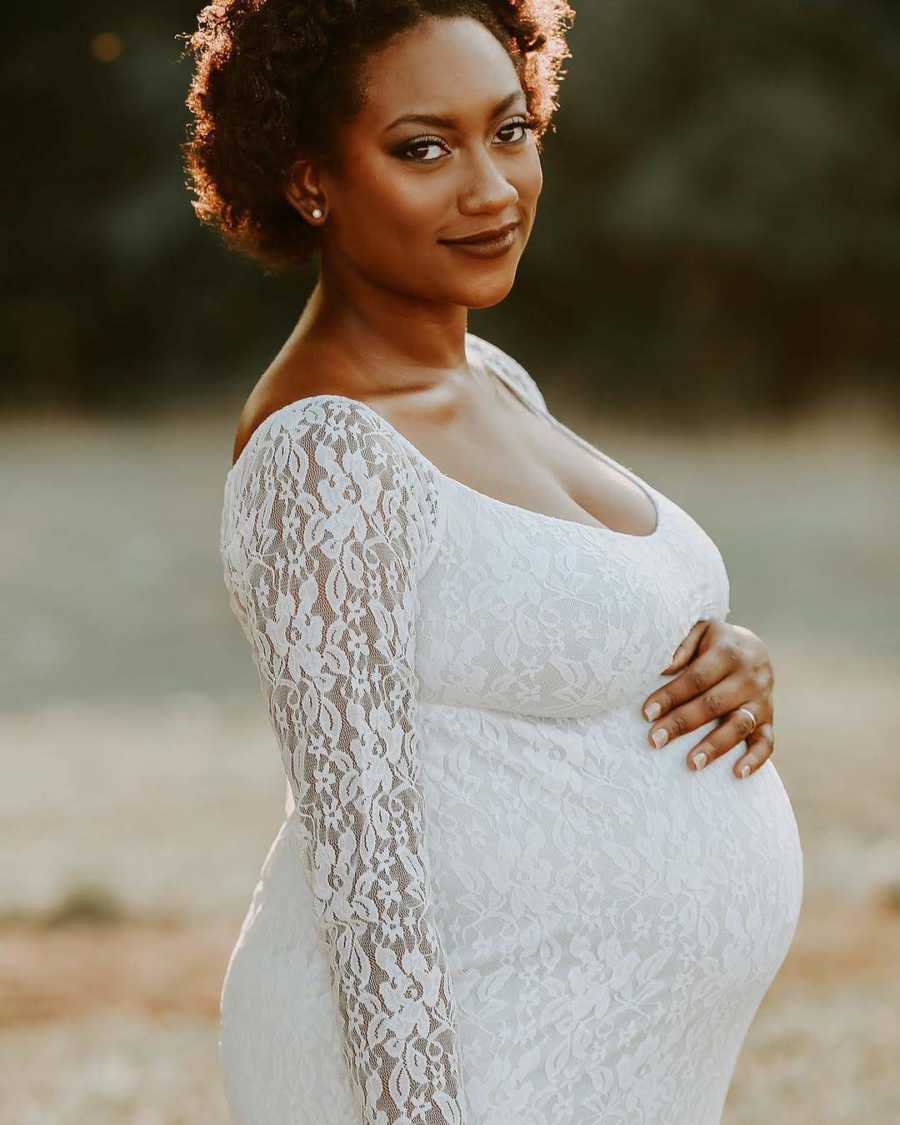
The very next morning, we drove to Tulsa, OK, for the specialist appointment at 8 a.m. The ultrasound was familiar—the same story. Everything looked perfect, except that head. They tried every angle, but nothing worked. And that’s when words we had never expected—microcephaly, encephalocele, possible anencephaly—entered our vocabulary.
The specialist explained that Ozzie’s skull hadn’t fully formed, leaving a small opening with brain tissue protruding. He believed it wasn’t Trisomy 18 but something else entirely. We were asked if we wanted to terminate the pregnancy. Without hesitation, we declined. We weren’t ready to make a decision without certainty; we would carry our baby to term and let God guide the rest.
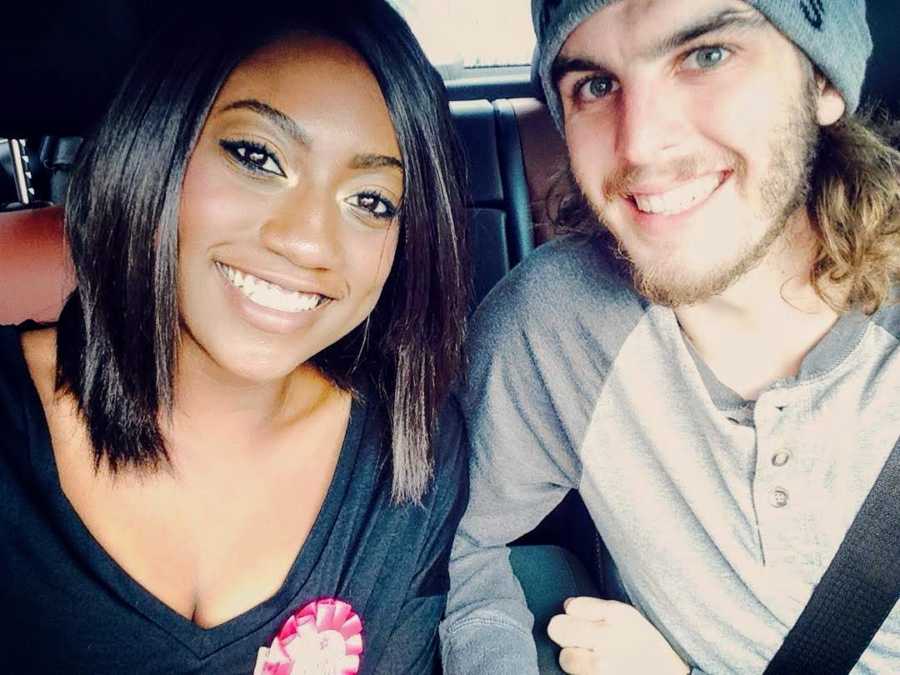
From that moment on, I focused on cherishing every moment of my pregnancy. We shared the news with family and a select few friends. Being only 23 and 24, we knew no one who had walked this path. Everyone around us had healthy babies, so why not us?
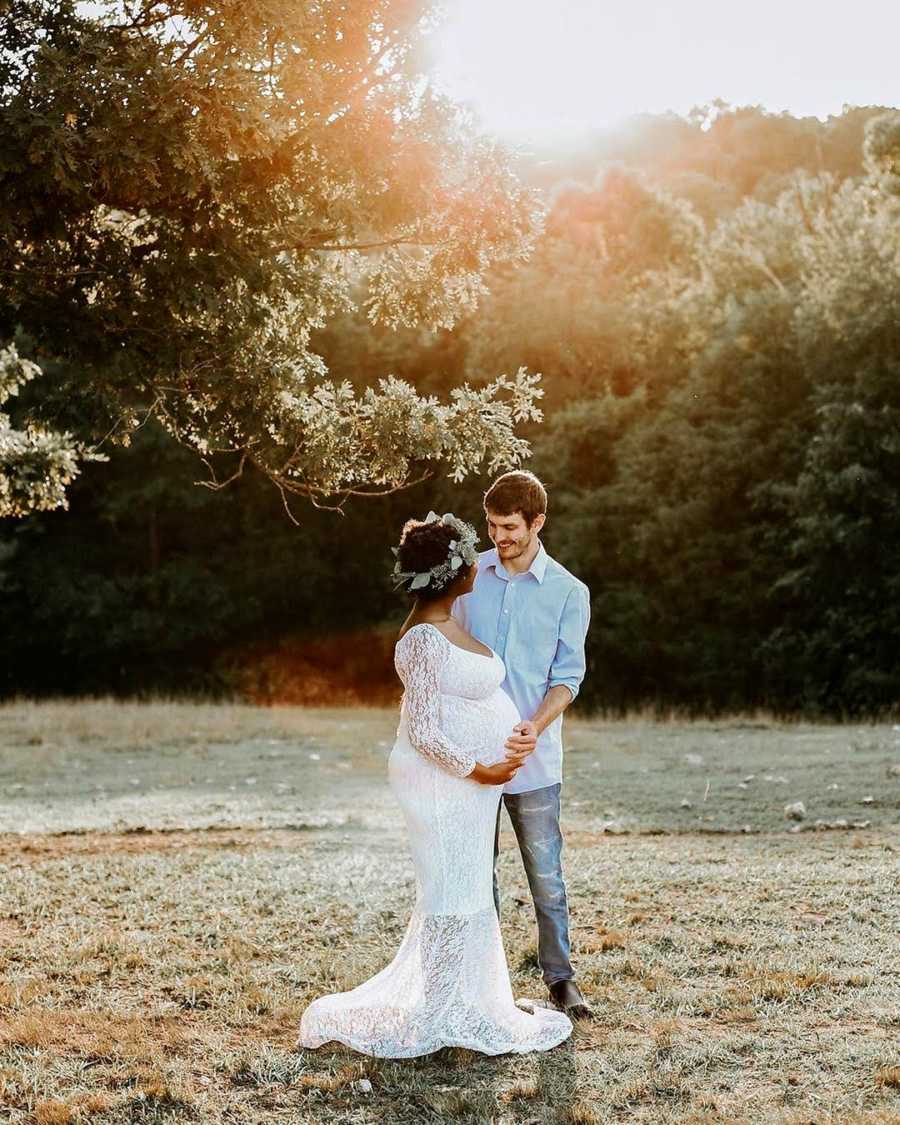
We continued routine OB visits and specialist appointments, prayed relentlessly, and hoped for a miracle. My prayer was always for Ozzie to be made whole, to be healthy and happy. My husband and I even created a palliative care plan with the hospital, ensuring that if Ozzie didn’t survive, he would be comfortable. But my heart told me he was a fighter—he was ours, and he was meant to fight.
As my due date approached, we planned an induction for October 3, so family could be present. But God—and Ozzie—had other plans. On September 30, I went into early labor at work. I finished my shift, ran last-minute errands to prep the nursery, and by 9:30 p.m., contractions were intense. We grabbed our bags and headed to Tulsa.
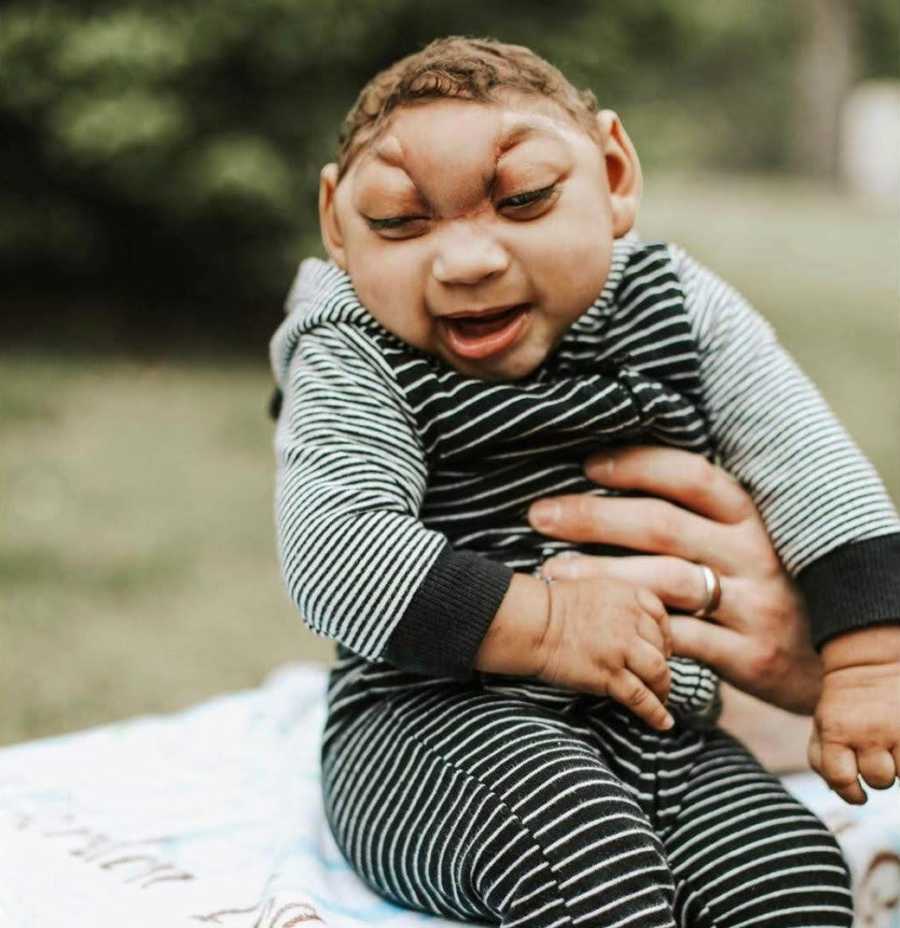
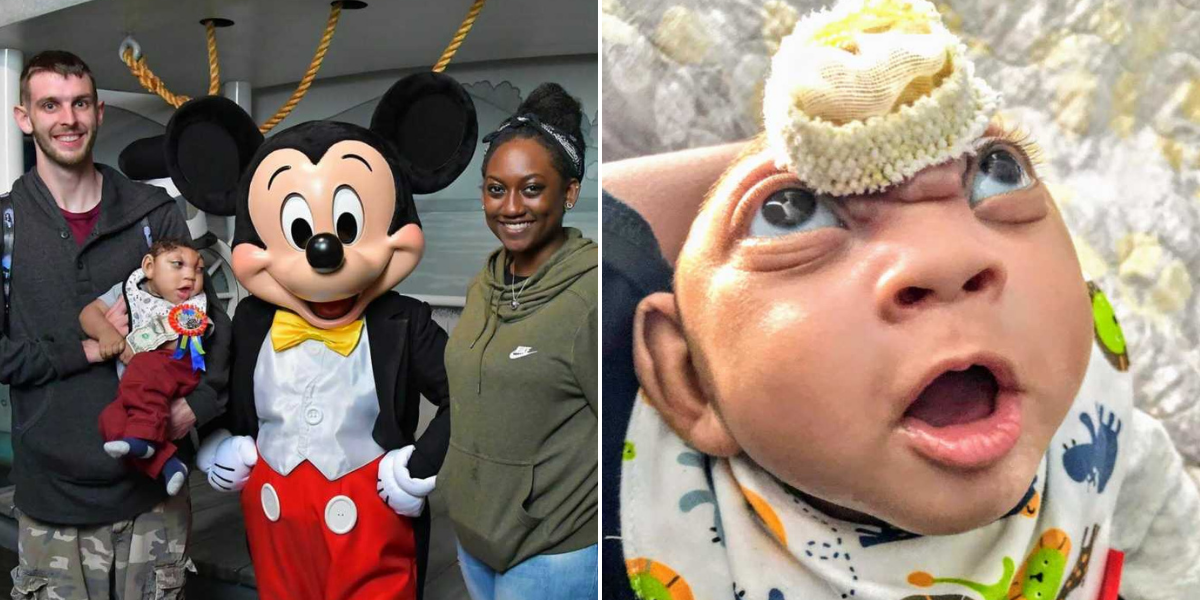
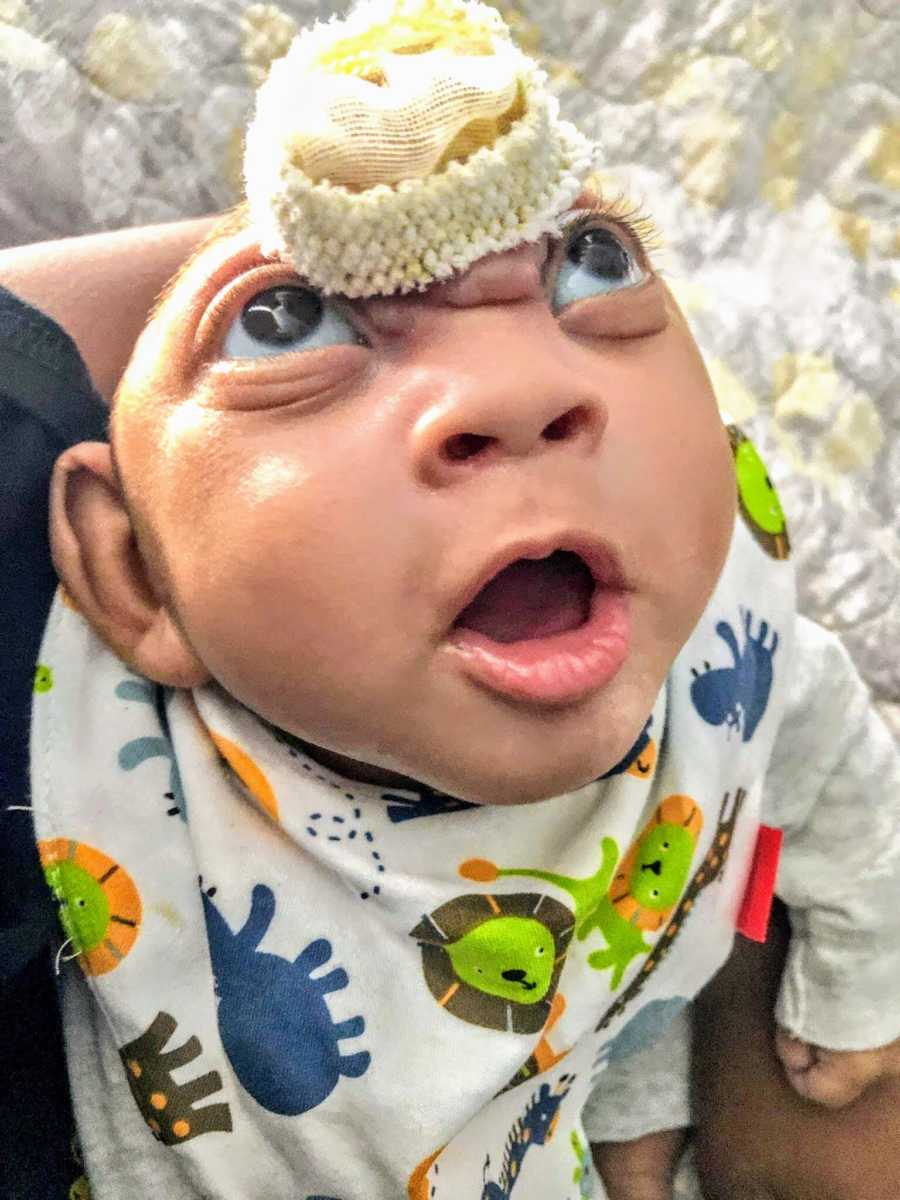
Labor was surprisingly smooth for a first-time mom. My water broke naturally, and after an hour and a half of pushing, Ozzie was in our arms. Questions flooded my mind: Is he alive? Is he okay? How’s his head? Fingers and toes? But when he sneezed—a tiny, miraculous sign that he was here—I fell instantly in love. Despite the encephalocele covering part of his face, he was perfect to me.
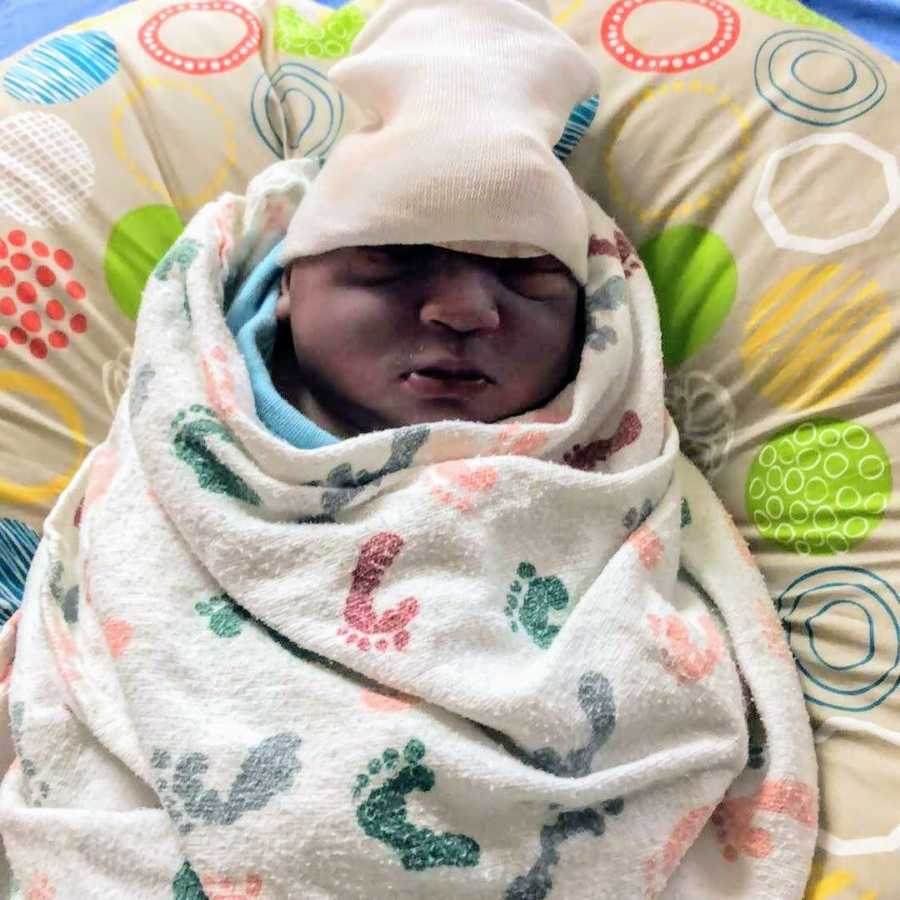
Our palliative care plan had included a chaplain and a photographer from Now I Lay Me Down to Sleep, who captured his first moments. But those pictures wouldn’t be “goodbye” photos—they were of life, not loss. For hours, we watched him thrive, each diaper change and feeding a victory. My motherly instincts kicked in. This baby was staying.
With time, we arranged hospice care so Ozzie could go home safely. On October 3, the day we were supposed to be induced, we brought him home. The first weeks were hectic, but as his health improved, the chaos faded. Today, at almost four months old, Ozzie is happy, healthy, and thriving. He feeds and eliminates on his own, takes anti-seizure medication, and hits developmental milestones like any other baby.
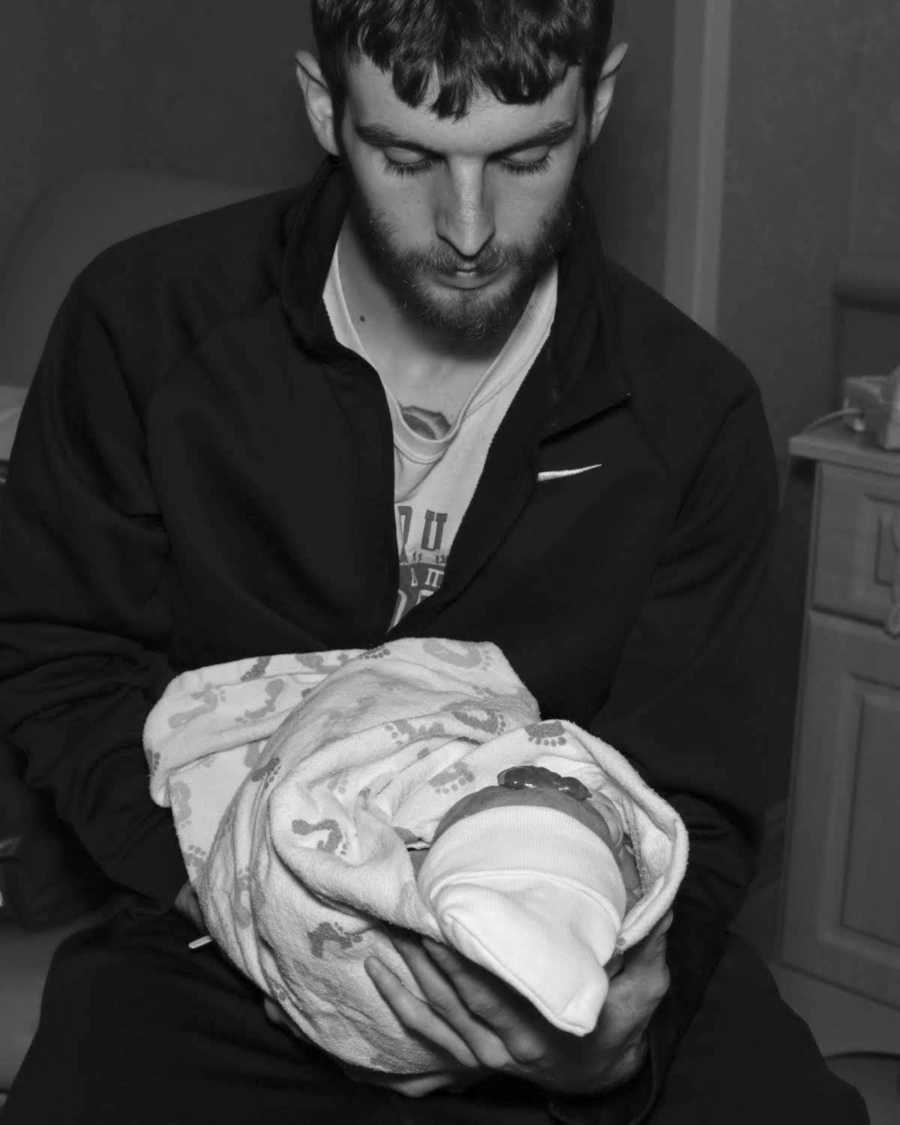
We found a neurosurgeon in Dallas who will operate to remove Ozzie’s encephalocele, and things are looking up. Our journey has been filled with fear, uncertainty, and prayer, but it has also been a testament to faith, hope, and the power of miracles.
To any parent facing a similar diagnosis: hold onto hope. Trust your instincts. Miracles happen, and God has a plan—even when the path seems impossible.
Update: Almost four months post-op, Ozzie is thriving. Hospice visits are done, and our focus is simply giving him a joyful, full life.