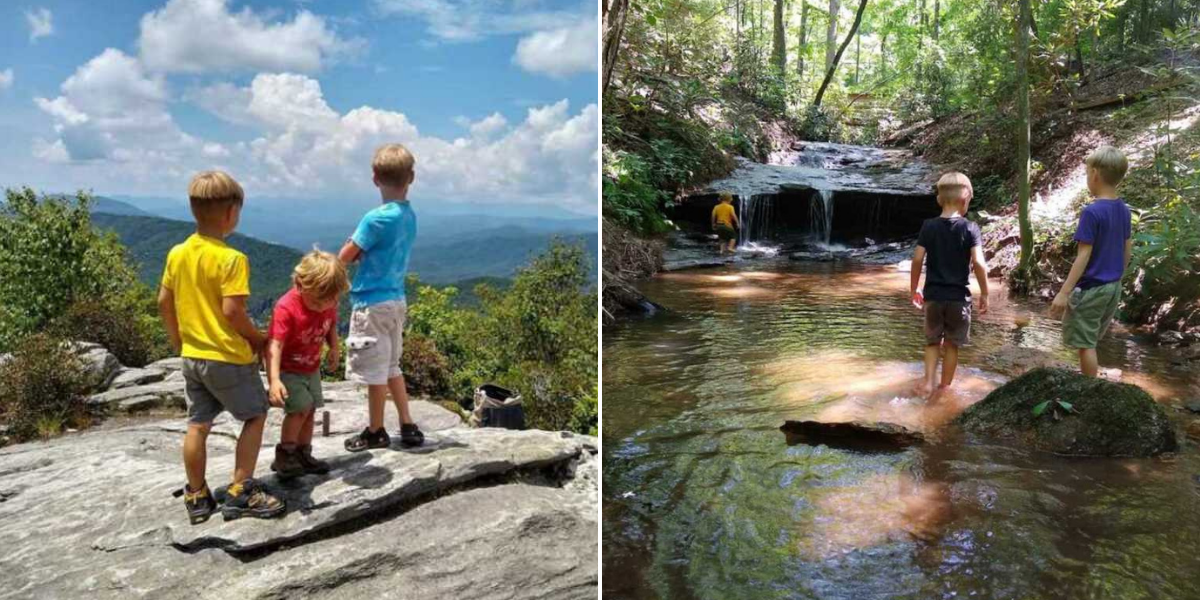
Hiking along the trail, I followed a few steps behind my youngest, while his two older brothers and dad disappeared just around the bend ahead. He stopped suddenly, eyeing a large rock that came up to his chest. He studied it carefully, turning it over in his mind. I stood nearby, sipping water, giving him the space to think through his next move.
“Mama, I thinks we need to climb around this big guy!” he announced with determination.
“Okay, baby, let’s do it!” I encouraged.
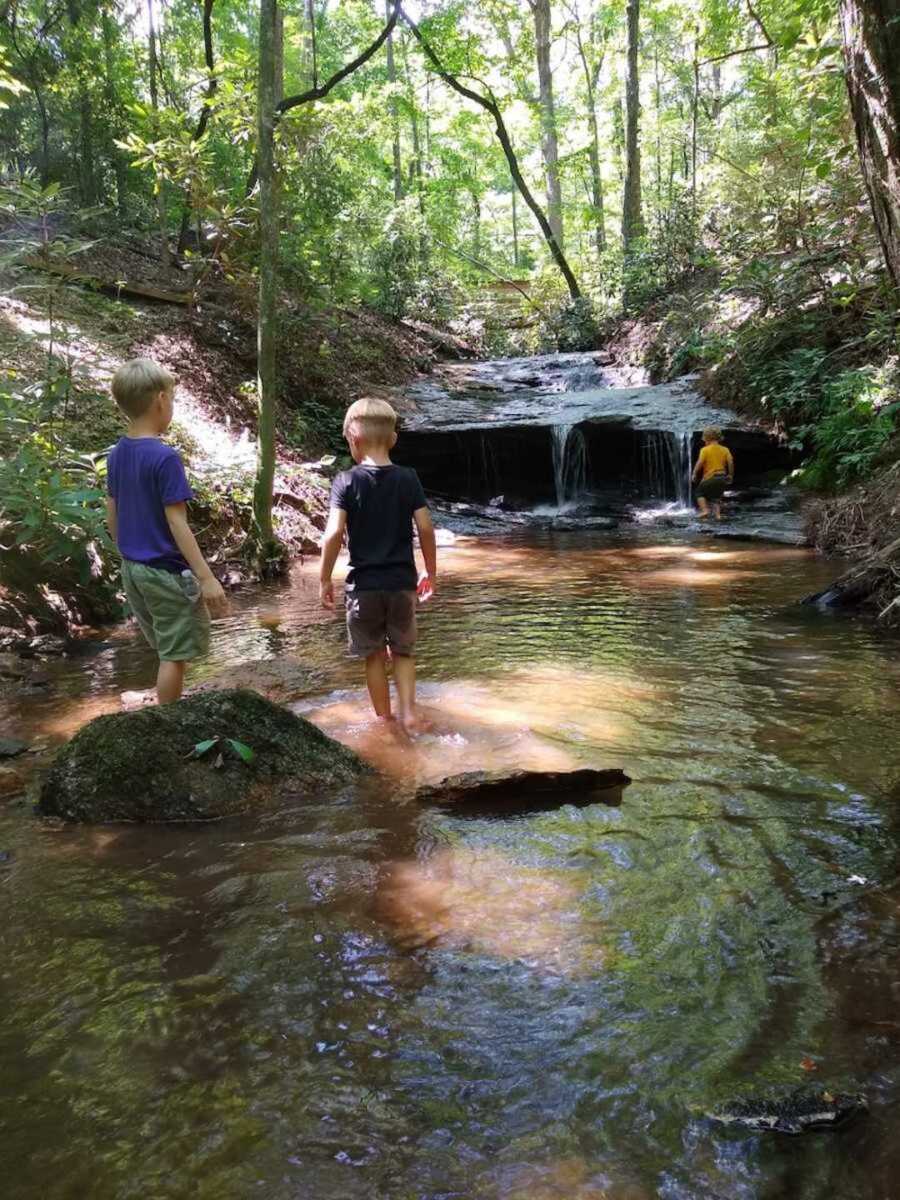
He lifted his tiny size 9 hiking boot onto the slope beside the rock, shifted his weight, and carefully climbed around it. I stayed at the bottom, ready to catch him if things went wrong, but confident in his growing independence. When he reached the top, he stood just a bit taller than me, arms stretched toward the sky, and shouted, “Mama! I did it! I am a big rock climber! Mama! Look how tall I am up here!” His elation was contagious, and the rest of the hike up was filled with his radiant joy.
He had problem-solved. He had used his body. He had conquered something that had seemed bigger than him. He was proud—and rightly so.
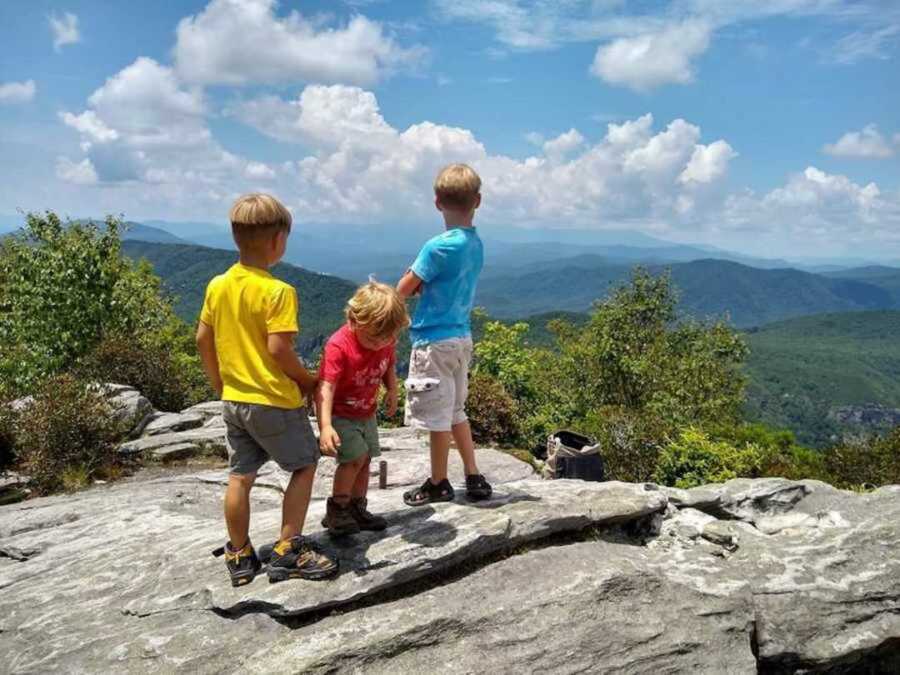
At the summit, we paused for a picnic. Hummus and fruit were shared as we soaked in the views, stretching endlessly in every direction. Eventually, it was time to descend. We packed up, snapped a few photos, and headed back down the trail.
For most toddlers, the hike down proves trickier than the ascent. Their little legs carry them fast and often recklessly, and today was no exception. He slipped, landing on his bottom more than once. Though he wasn’t hurt, his pride took a small hit, and his earlier confidence wavered.
As we navigated around another large rock, another hiker approached. My son paused, trying to decide how to climb down. I stayed less than a foot away, explaining gently that we could go around the rock or climb down it—he could choose. But the hiker couldn’t resist:
“Here, buddy, I can help you down.”
I met his eyes calmly. “He doesn’t need help—he needs time to problem-solve. Why don’t you go around us? We may take a minute, and I don’t want to hold you up.” The man mumbled something and continued ahead, clearly frustrated that I hadn’t simply hoisted my son down.
But that wasn’t my role. I wasn’t standing there because I couldn’t help; I was there to guard against real danger while giving him the space to figure things out. I want my children to experience the full spectrum of challenges and emotions while knowing I’m present to guide, not to do it for them.
I could have helped him, but then he wouldn’t have learned that he could face a challenge and solve it on his own. In a world where social media often pressures us to shield children from failure, it’s easy to forget that disappointment, frustration, and struggle are as real in adulthood as joy and accomplishment. If children only practice the emotions that feel comfortable, they risk becoming adults who aren’t equipped to navigate hardship, disappointment, or problem-solving on their own.
Climbing a rock on a trail may seem small, but the lesson is far larger. The next time we hiked, my youngest knew what to do. He assessed, planned, and acted—he trusted his own judgment. And I was there, not to fix, but to steward, ready if necessary. Because our role as parents isn’t just to raise children—we are raising future adults, capable of facing the world on their own.