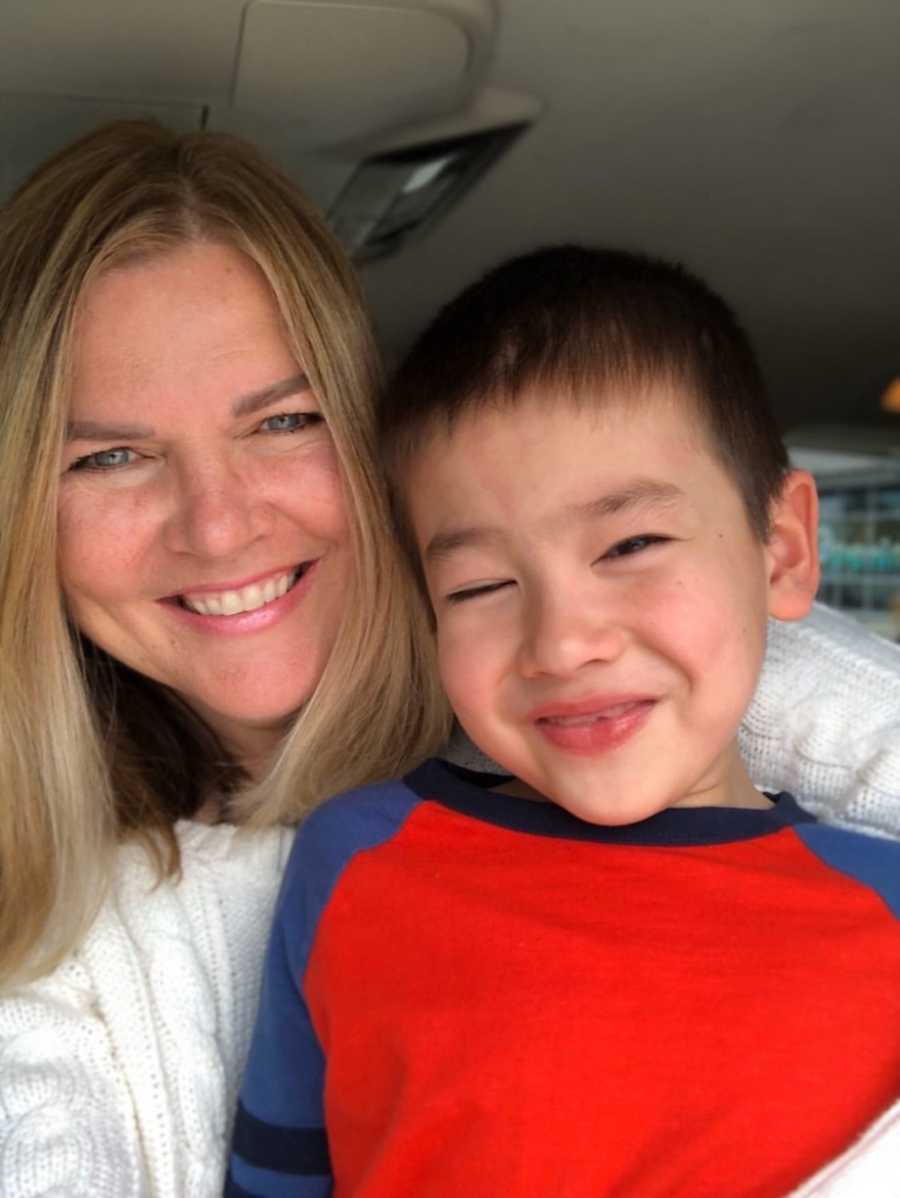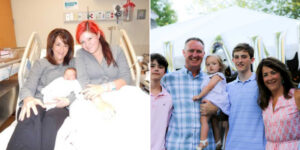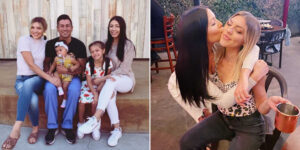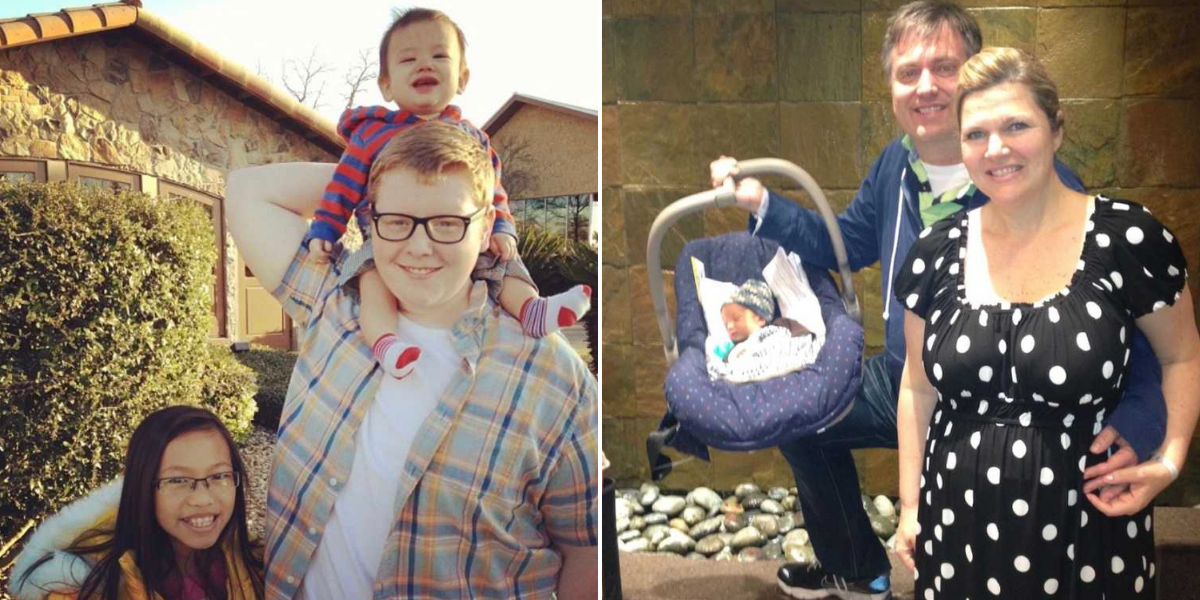
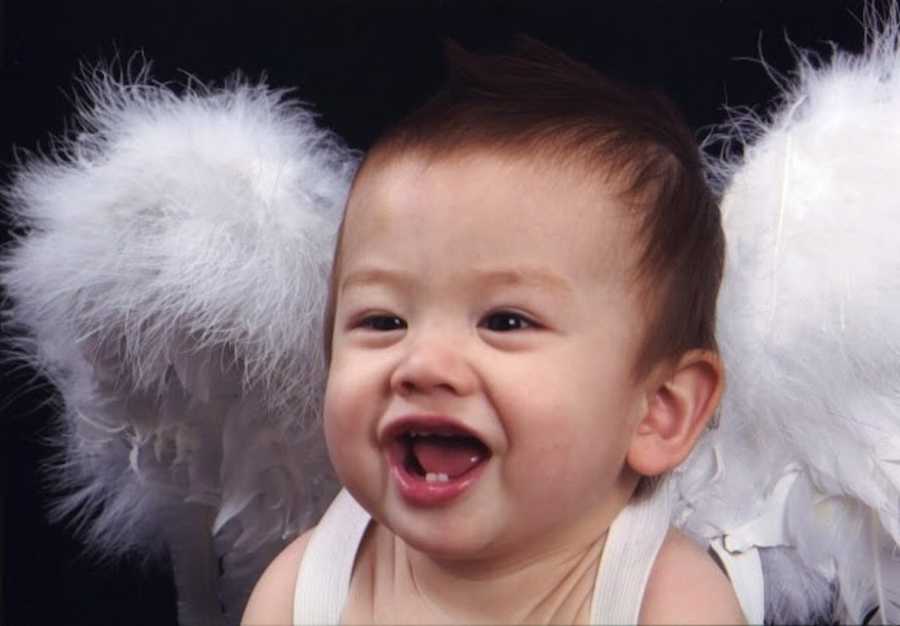
This little angel came into our world, sent directly from heaven, without a doubt. Isaac is our fourth child, but the first that I gave birth to. He was the result of a successful treatment called In Vitro Fertilization (IVF), our first and only attempt. The fact that I was 48 years old when I got pregnant is a miracle in and of itself. I had long since given up the idea of ever being able to experience pregnancy and childbirth after having been diagnosed with “unexplained infertility,” until a rare contact from a dear friend renewed my desire and hope. This is the story of how Isaac came to be, and the loving environment that welcomed him, full of faith, hope, and small miracles along the way that led to our pursuing this dream.
There was a three-week window of opportunity when our family had come to our Austin, Texas, home for the holidays while we were living in Taiwan for a year. A long-lost friend had sent us a beautiful Christmas card—perhaps the first holiday greeting we had ever received from her—that included a lovely family portrait, where she had written a note apologizing for not being in touch after I had tried to reach her while she was in the hospital.
I wondered why she might have been in the hospital. Did she actually give birth to those two new babies in the picture? I was so curious because, like us, she and her husband had adopted their other kids. I felt urged to call her to clarify what I had been guessing, and she confirmed my speculations—she had indeed given birth to twins from a successful round of IVF. I was elated for her and expressed my happiness, noting that I didn’t even know it was possible at our age (she is six months older than me). She suggested that I look into IVF. At first, I dismissed the notion, telling her that my oldest daughter had just started college and everyone would think it was crazy, myself included. Yet somehow, I could not stop thinking about the possibilities.
That was in January of 2011, and once again, those natural maternal instincts resurfaced with a vengeance. That night, after we spoke, I searched the internet and found a Taiwanese blog that was actually in English for a clinic in Hsinchu, where we lived, not far from our house. As of today, that blog has not been updated since then. It felt as if it had been put there for my benefit. I called from Texas to Taiwan and made an appointment to see the doctor the day after I flew back to our home-away-from-home in Hsinchu.
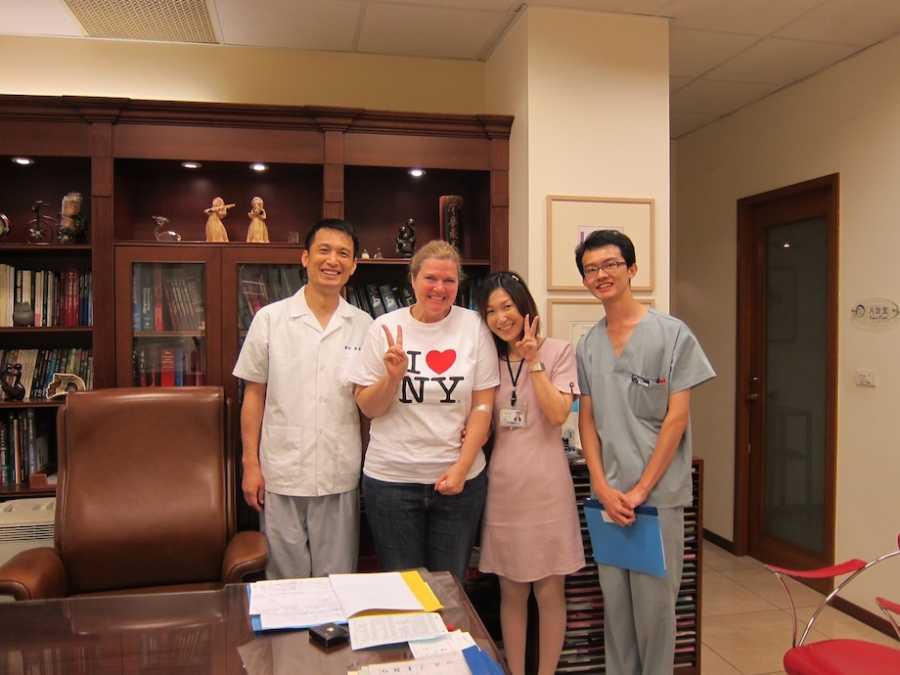
We only had one car, so I dropped Kelly off at work, then went to my initial appointment, navigating through the well-populated and densely packed businesses with almost all the road signs in Chinese. Like most of the places I went to, I was the only non-Asian person at the clinic and stood out like a sore thumb. It is awkward enough to go to an OB/GYN when you can blend in, but when it seems like everyone is aware of your presence because you look different from the rest, it adds to the discomfort. The reception staff greeted me in limited English, I paid cash for the visit, had some tests, then met with Dr. Lai and a wonderful gentleman named Ian, who became my interpreter for the remainder of my contact with the clinic, always incredibly helpful and accommodating. The staff worked long hours and were professional and efficient. There were a few things much different from a doctor’s office in the U.S., but all I really cared about was the end result: having a baby.
After one cycle and some fertility drugs, Dr. Lai concluded that my ovarian reserve was diminishing and the quality was not the best, considering my advanced maternal age. He convinced us that the best option would be to use an egg donor. We had many big questions to consider and both of us prayed a great deal over what to do. One major concern was how our kids, Lindsey, 19, and Christopher, 13, would feel if I were to get pregnant and have a baby. As predicted, they were thrilled with the idea. I also wondered what my friends and family would think and asked some of them. We got mixed reviews and realized that ultimately, the decision should be between the two of us and our Heavenly Father. We both felt strongly that we should proceed with it, and so we did.
It had not occurred to me at first, but after asking Dr. Lai, he told me that all the egg donors would be Taiwanese. Personally, that did not bother me at all, but how would others respond to having a mixed-race baby, one who didn’t look like a combination of the two of us? A half-American baby from Kelly’s genes and a half-Taiwanese baby from an anonymous young woman—what would that look like? I wanted her to be tall, intelligent, and cute, but how could I put that on paper? We would have to wait for a match, and our cycles had to be synced within five days. There was also a lot of red tape to endure. We had to go through tons of paperwork, getting our marriage license authenticated for Taiwanese standards, which was really a pain.
In the meantime, a whole new element of surprise arrived. At the end of February, we were introduced to a little 7-year-old Taiwanese girl who needed a family. Her situation was complicated and confusing. Could this child be the answer to our prayers? Should we continue with IVF? I did not know what to do, so again, we prayed and asked for guidance. Both Kelly and I felt we should keep pursuing the adoption and the IVF, not knowing if one or both would succeed. We were open to whatever God had in mind.
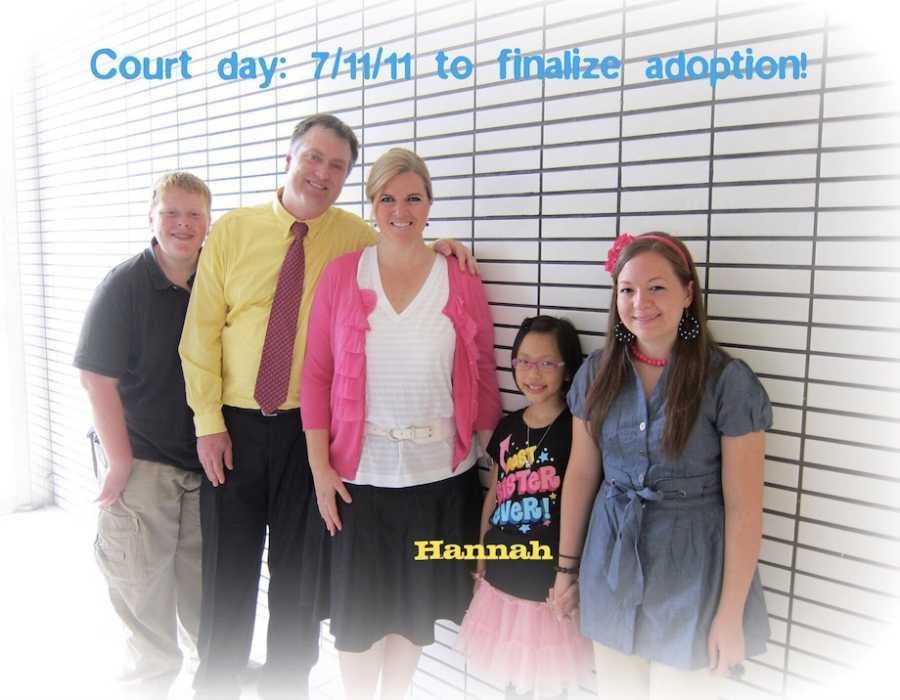
By May, we got the “go-ahead” from Hannah’s birth father, who was willing to relinquish her for adoption. Her birth mother was deceased. In a miraculous way, we went full speed ahead to complete all legal work before moving back home in August. We hired a U.S. social worker, Josh Redfern, to fly over to meet us and do a home study. We applied for her U.S. citizenship, met with Taiwanese courts and social workers, and finally, Hannah—the name we gave her—was living with us and her adoption was finalized in Zhubei City, Hsinchu County, Taiwan, on July 11, 2011 (7-11).
In June, we were matched with a donor, and I was taking multiple drugs to prepare my body for transfer. Anonymous Egg Donor #1 had been taking medications to prepare for egg retrieval. After a few days, fertilization did not occur as expected, leaving me discouraged and frustrated, an utter hormonal mess. I was almost ready to give up, but Kelly’s hope kept me going. We had already paid for the first donor, and though we had not made it to transfer, the clinic kindly offered another cycle using ICSI (intracytoplasmic sperm injection) at no extra cost other than paying for a second donor. Time was running out before our move to the U.S. in August. Miraculously, a second donor matched my cycle.
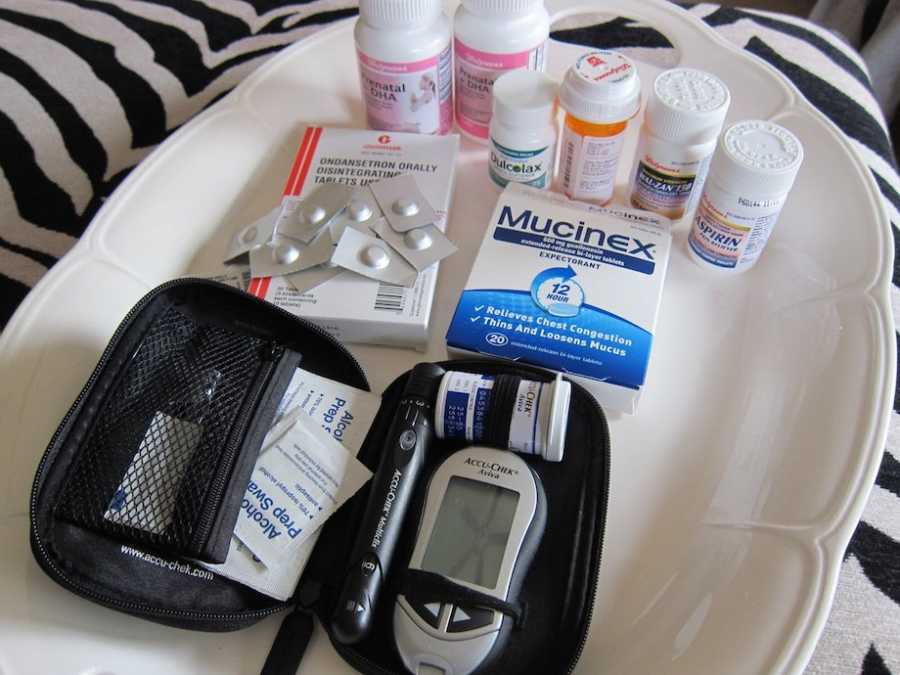
I continued taking seven different medications, and Anonymous Egg Donor #2’s egg retrieval was successful. The ICSI procedure was performed, and after five days, four blastocysts developed. We chose two to transfer into me. I had hoped for twins, but we stuck with two embryos to avoid the stress of triplets. Those two embryos were the very beginning stages of the human being known as our Isaac.
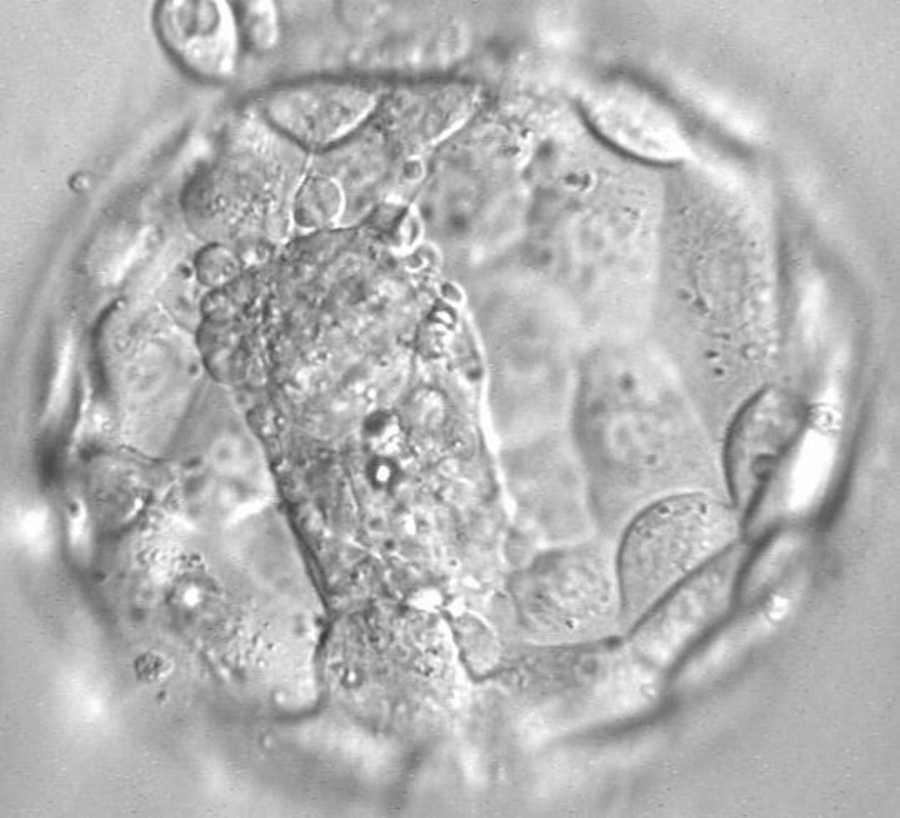
The IVF transfer occurred on July 13, two days after Hannah’s adoption was finalized. Kelly waited in the waiting area. The procedure was a bit painful, with the catheter being the worst part, but the nurse held my hand, explained everything in English, and kept me calm. Dr. Lai skillfully performed the transfer, injecting the embryos with precision. I lay on an elevated bed for two hours afterward, fearful that the embryos might be dislodged, walking cautiously from the clinic to our apartment. Poor Hannah had no idea why I was lying in bed, while the older kids were supportive. I learned the acronym “PUPO”—pregnant until proven otherwise—and waited fifteen days to confirm the pregnancy.
On July 28, 2011, I discovered the miracle had worked. I was pregnant at 48, just weeks from our 25th wedding anniversary. I was overwhelmed with gratitude and disbelief, thankful for the donor, for science, for our faith, and for Kelly’s unwavering hope.
We returned to the U.S. in mid-August, and I began high-risk pregnancy visits with Dr. Kimberly DeStefano and Dr. Ariel Holley. Ultrasounds revealed only one baby—enough, as it turned out. My pregnancy was difficult, with gestational diabetes and daily testing, but every challenge was worth it. Isaac’s due date was March 31, 2012. A final ultrasound revealed he had not gained weight, and Dr. DeStefano ordered an immediate delivery. A C-section was performed on March 19, 2012, at 10:29 p.m., with the umbilical cord wrapped around him multiple times. He might not have survived had we not gone in that day. I was 49 years and four months old—like Abraham and Sarah, we experienced a miraculous late blessing.
Isaac faced jaundice for a day or two under heat lamps, but soon thrived. I experienced recovery pains, headaches, and challenges with breastfeeding, but with support from Kelly, friends, and a lactation specialist, I successfully breastfed him until ten months old. Kelly helped with diaper changes and celebrated every milestone with pride and love. We finally left the hospital on March 23 and settled into life as a family. Isaac grew quickly, reaching his birth weight within a week, loved bath time, and charmed everyone around him.
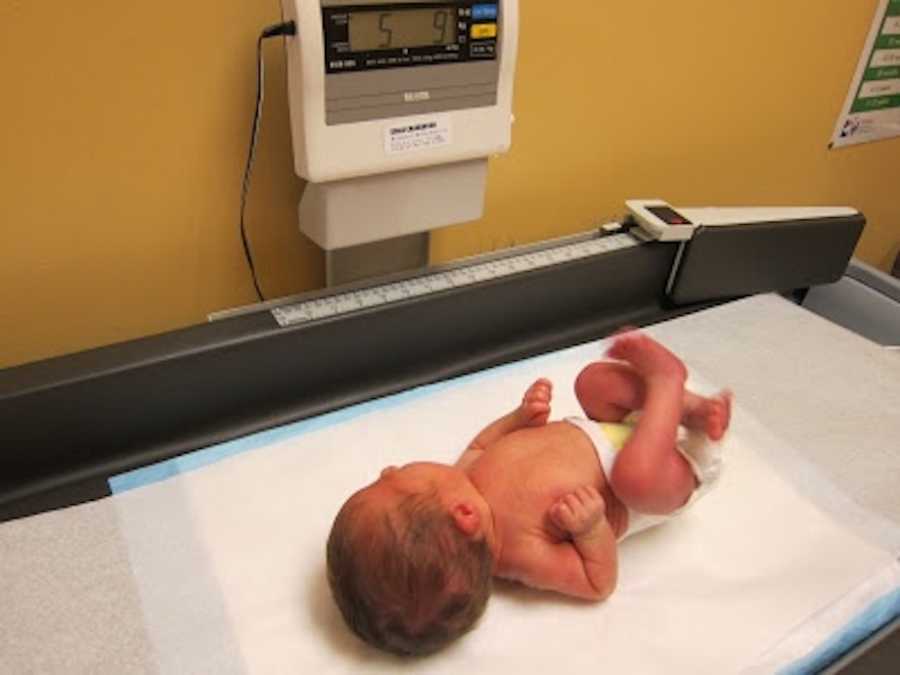
One year later, Isaac weighed 18 pounds, four ounces, just under the tenth percentile for weight, second percentile for height, and 25th percentile for head circumference. Healthy, happy, and adored deeply, he is a living testament to miracles, patience, faith, and perseverance.
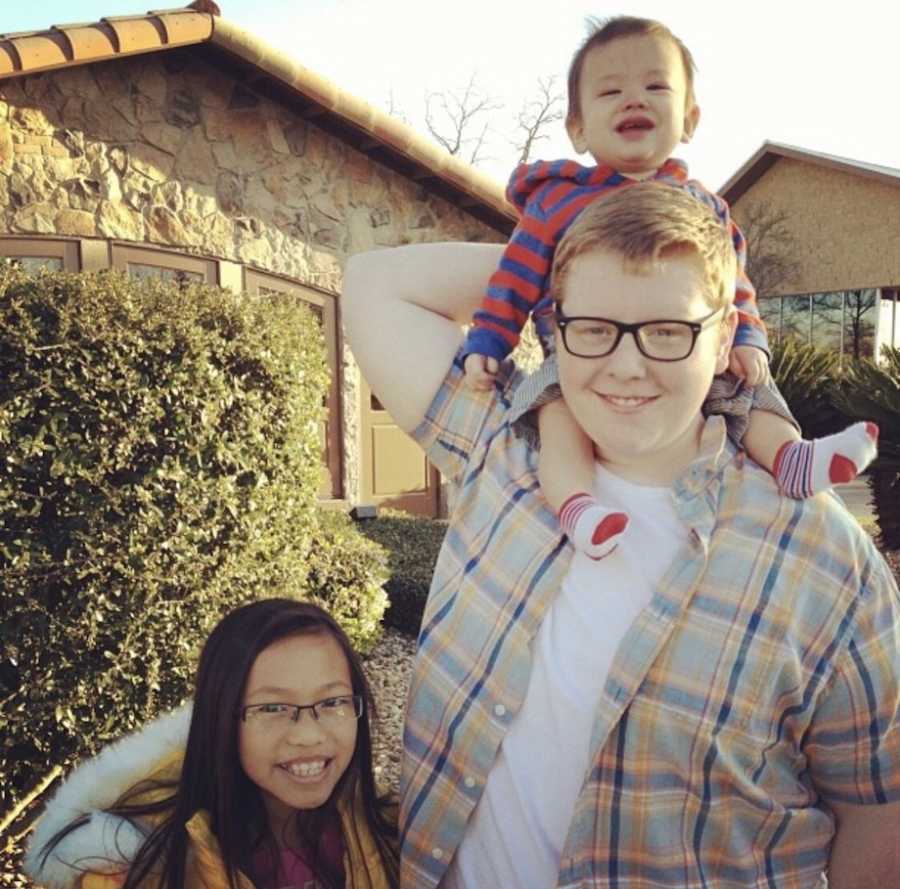
Our lives have been forever changed and enriched by Isaac and Hannah. Every struggle, every prayer, and every small miracle along the way brought us to this moment of profound joy. Truly, life is more wonderful than we could have imagined.