Years ago, a very wise woman shared something with me that has stayed with me ever since: while our circumstances in life may differ, the emotions we experience are universal. There’s a surprisingly finite set of feelings that we all, at some point, encounter. Often, we feel isolated—not because our emotions are unique, but because we don’t always talk about them or share our experiences. The truth is, many of the feelings that make us believe we are alone are ones that countless others have felt too.
One of my greatest fears is that my children might ever feel isolated in this way. I don’t want them to believe that they are alone in the world, experiencing emotions that no one else can understand. I know that life will bring them difficulties, and they will inevitably feel big, heavy, and sometimes overwhelming emotions. My goal is not only to help them navigate those feelings but also to show them that these emotions are shared by so many. I’ve realized that the best way to teach this is to openly share my own experiences with them.
Recently, my daughter bravely asked me if I had ever felt a certain way. Her question lingered with me for days, and I realized it was an opportunity—an opening to create an honest dialogue about my real experiences and real emotions. I could choose to parent from a distance, perched on the pedestal of adulthood, with a PhD, a successful career, and the confidence that comes with life experience. I could.
But I also knew I could show them the truth: the path I traveled to reach this place was anything but smooth. It was full of mistakes, disappointments, fear, and uncertainty. Yet it was also filled with laughter, joy, love, and small victories. I have experienced it all—the highs, the lows, the messy, beautiful chaos of life. And I want my children to know this too.
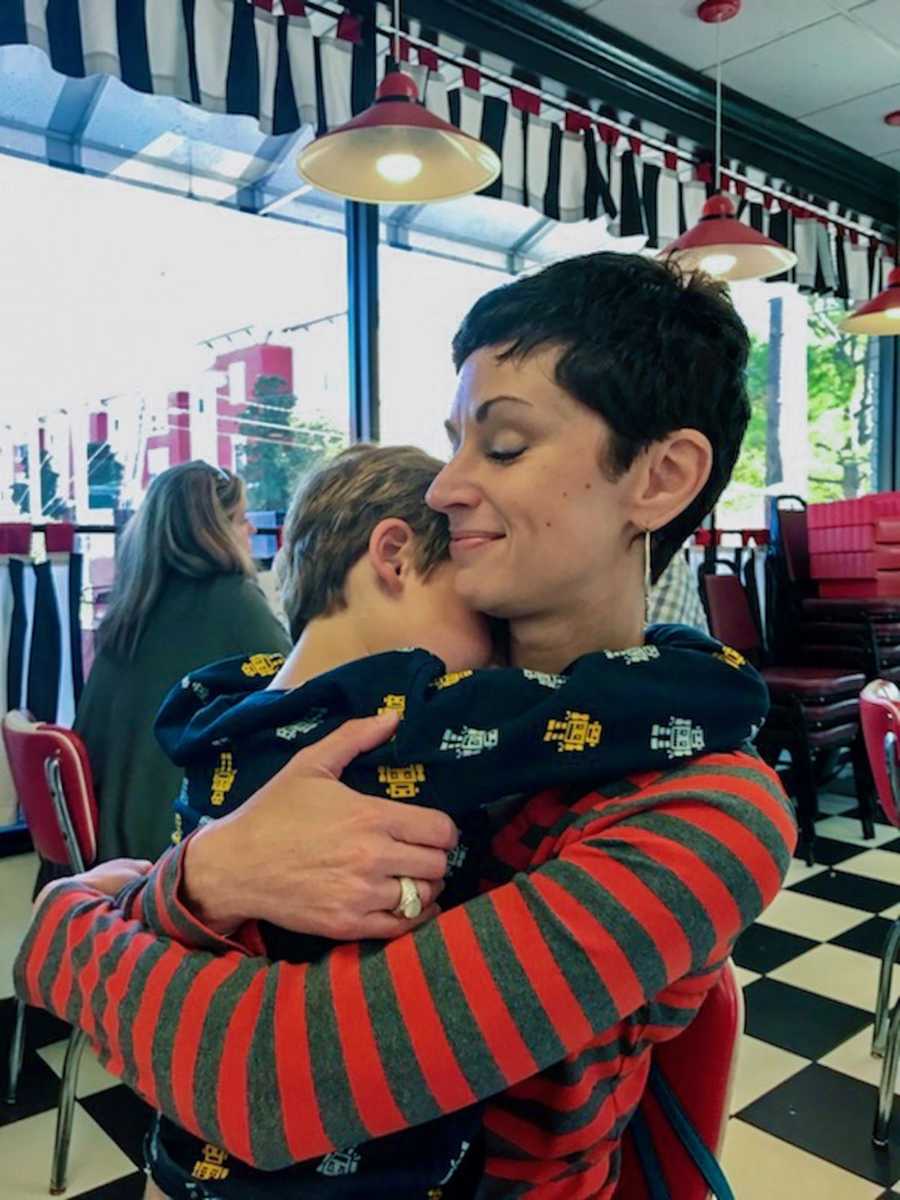
Having someone to look up to is important, but it’s equally important for them to understand that life is messy, unpredictable, and often imperfect. I don’t want them to think that my life happened overnight. So, I began sharing stories from my own childhood. I told my daughter about the time, when I was nine, that I refused to participate in dance class. I sassed my instructor out of boldness, only to feel overwhelming guilt and shame later. I spent a week grounded in my room, learning firsthand what it means to push boundaries—and face the consequences.
I also shared the time I felt so jealous of a friend who had started her period that I could barely speak to her. To ease my jealousy, I secretly wore pantie liners to school even though I didn’t need them. Silly, yes—but it helped me feel some sense of control. I wanted her to know that jealousy is natural and that sometimes, our feelings can make us act in ways that seem strange or illogical. It’s all part of being human.
I told both of my children about my first crush—the time I agreed to kiss a boy in the back of the schoolyard, far too young for such things, and how embarrassed I felt when my friends didn’t cover their eyes, but watched and laughed instead. I explained how love can make you do impulsive, even ridiculous, things. And I also told them about the time I was brave enough to be the first to say “I love you” to their father, showing that love can inspire courage as well as folly.
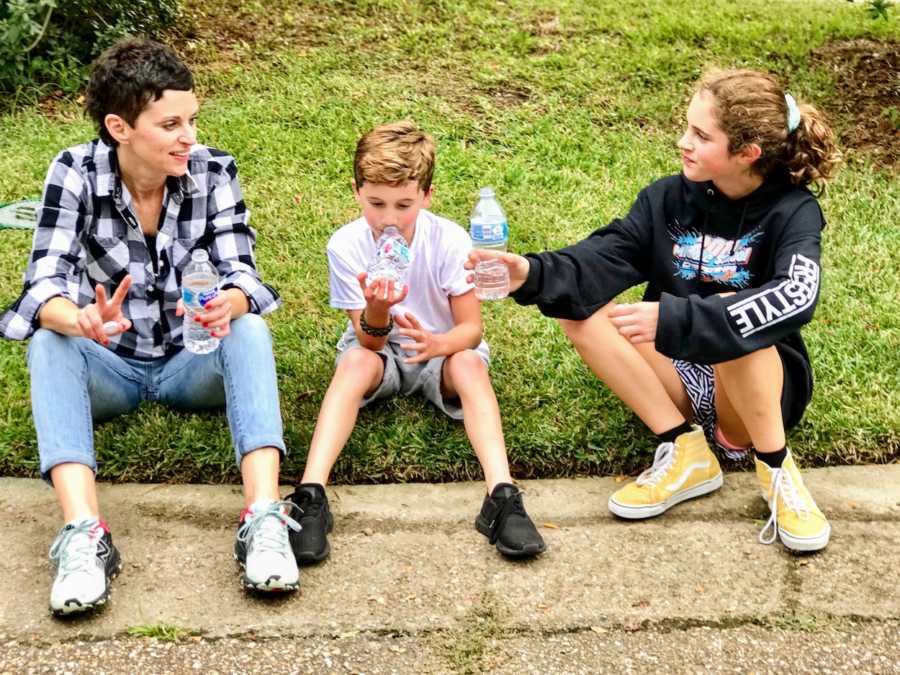
I spoke to them about social pressures—the times I ate lunch alone at school, and the times I stayed silent while others did the same to someone else. I shared the things I didn’t do out of fear: the classes I didn’t take, the calls I didn’t make, the events I didn’t attend. And I shared the things I did despite fear: the calls I did make, the auditions I went on, the stories I wrote and submitted, the risks I took. Fear, I told them, is powerful—but it doesn’t have to control us. It can either hold us back or push us forward. Feel the fear, and do it anyway—unless it’s truly dangerous, illegal, or reckless.
I’ve also been open with them about heartache and heartbreak, failures and successes, joy and excitement. I’ve told them that love is not just a feeling but an action—a choice we make every day. I want my children to see the full spectrum of life, to understand that mistakes, stumbles, and awkward moments are all part of growing, learning, and connecting.
So, Lucy, I have a lot of explaining to do. Every small misstep, every awkward moment, every laugh, every stumble—I will share it all. If these conversations help my children feel less alone, less isolated, and more connected to the shared experience of being human, then it is worth every word. Every in, every out, every mistake and triumph—I will tell them, because our stories are what remind us that we are never truly alone.